
Top SEO Mistakes That Kill Website Traffic
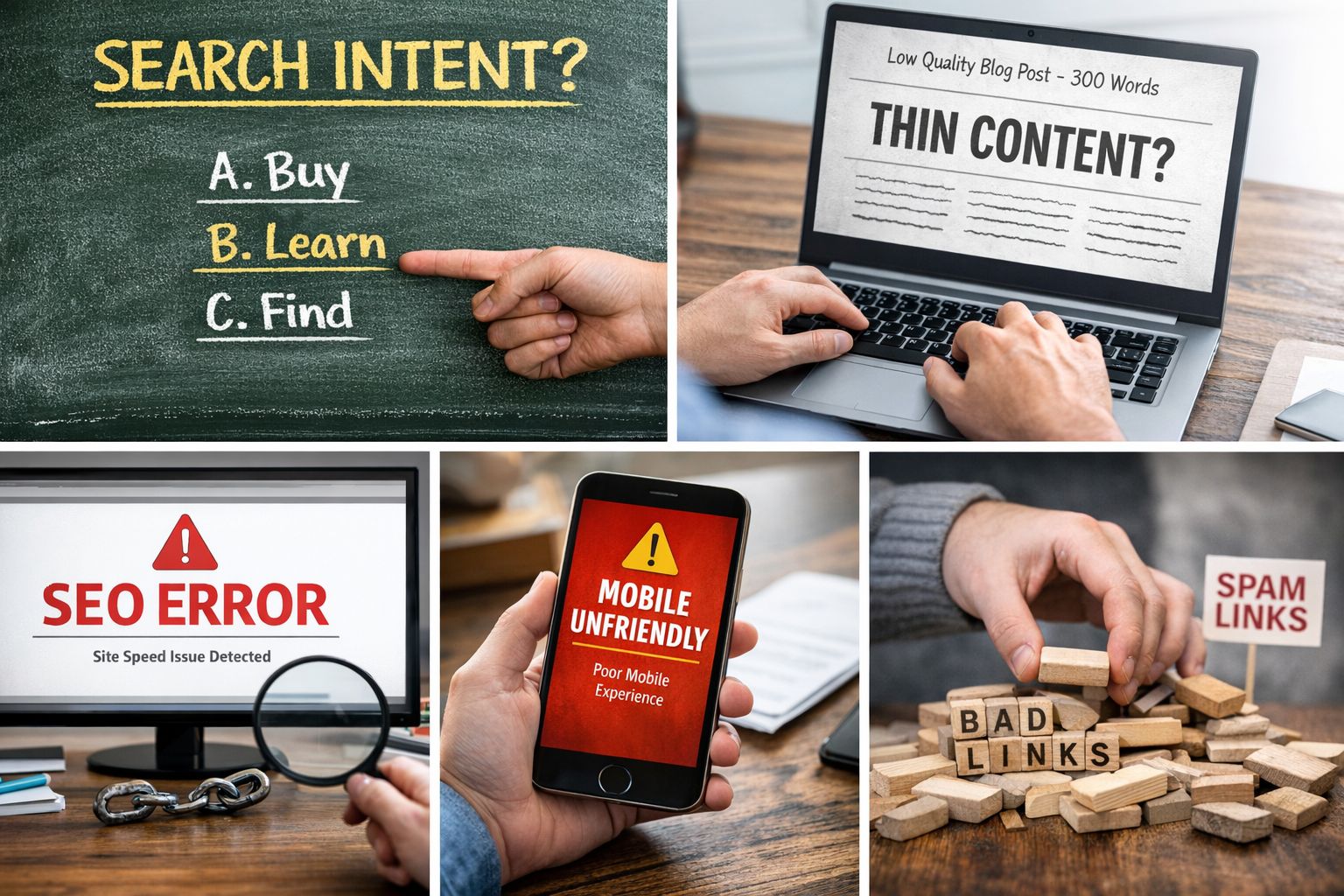
One of the biggest SEO mistakes that silently kills website traffic is ignoring search intent. Many websites focus heavily on keywords without understanding why users are searching for those terms. Search intent can be informational, navigational, commercial, or transactional, and content that does not match this intent fails to satisfy users. When visitors land on a page and do not find what they expect, they leave quickly, increasing bounce rates. Search engines interpret this behavior as a signal that the content is not relevant, which gradually pushes the page down in rankings and reduces organic traffic.
Publishing Low-Quality or Thin Content
Low-quality or thin content is another major reason websites lose traffic over time. Content that lacks depth, originality, or usefulness does not build trust with users or search engines. Many websites publish short, repetitive articles just to increase posting frequency, but this strategy often backfires. Search engines prioritize helpful, well-researched, and people-first content. Thin content also struggles to earn backlinks and engagement, making it difficult to compete in search results. Fewer high-quality articles almost always perform better than large volumes of weak content.
Poor Keyword Research and Optimization
Improper keyword research can completely block a website’s growth. Targeting highly competitive keywords without authority makes ranking nearly impossible, while choosing keywords with no search volume results in zero traffic. Keyword stuffing is another common issue that harms readability and user experience. Overusing keywords makes content feel unnatural and spammy, pushing users away. Effective SEO requires balanced keyword usage, including long-tail keywords and related terms, placed naturally within valuable content that genuinely answers user queries
Neglecting Technical SEO Issues
Technical SEO problems are often invisible to website owners but extremely damaging to traffic. Slow page speed, broken links, crawl errors, duplicate content, and poor site architecture can prevent search engines from properly indexing pages. If search engine bots cannot crawl or understand a website, even great content may never appear in search results. Page speed is especially critical, as slow-loading websites frustrate users and increase bounce rates. Regular technical audits are essential to maintain and grow organic traffic.
Lack of Mobile Optimization
Failing to optimize for mobile users is one of the most serious SEO mistakes today. With most searches happening on smartphones, search engines now prioritize mobile-first indexing. Websites that are not mobile-friendly often suffer from poor layouts, unreadable text, slow loading times, and broken elements. This leads to a poor user experience and lost traffic. A website that performs well on desktop but poorly on mobile will struggle to rank and convert visitors effectively.
Weak On-Page SEO Elements
On-page SEO elements such as title tags, meta descriptions, headers, image alt text, and internal links play a crucial role in search visibility. Many websites either duplicate title tags, use vague headings, or completely ignore meta descriptions. Poorly written titles reduce click-through rates even when a page ranks well. Search engines rely on structured on-page elements to understand content relevance, and weak optimization can significantly reduce organic traffic over time.
Ignoring Internal Linking
Internal linking is often underestimated, yet it has a strong impact on SEO performance. Without proper internal links, important pages may remain hidden from both users and search engines. Internal links help distribute authority across a website, improve crawlability, and keep users engaged longer. A lack of internal linking leads to poor site structure, lower page views, and reduced ranking potential. Strategic internal linking strengthens content relationships and improves overall website traffic.
Poor Backlink Strategy
Backlinks remain one of the strongest ranking factors, and mistakes in link building can seriously damage traffic. Some websites focus on acquiring large numbers of low-quality or spammy backlinks, which can lead to penalties or trust issues. Others avoid link building entirely, assuming content alone is enough. Without authoritative and relevant backlinks, it is difficult to compete in search results. A clean, ethical backlink strategy focused on quality over quantity is essential for long-term traffic growth.
Failing to Update Old Content
SEO is not a one-time effort, yet many websites ignore their existing content. Old blog posts often lose traffic due to outdated information, broken links, or stronger competition. Search engines favor fresh and updated content that remains relevant to users. Regularly refreshing old articles with new data, improved structure, and updated keywords can restore lost rankings and drive traffic again. Ignoring content updates wastes valuable opportunities for organic growth.
Poor User Experience and Engagement
User experience is closely connected to SEO success. Websites filled with intrusive ads, pop-ups, confusing navigation, or cluttered layouts drive users away quickly. Search engines monitor engagement signals such as bounce rate, time on page, and interaction behavior. When users struggle to read or navigate a site, rankings decline. A clean design, clear navigation, fast loading speed, and readable content are essential for retaining visitors and maintaining search visibility.
Lack of a Long-Term SEO Strategy
Finally, the absence of a consistent and data-driven SEO strategy can slowly kill website traffic. Many websites chase trends, rely on shortcuts, or abandon strategies too quickly. SEO requires patience, regular analysis, and continuous improvement. Without tracking performance, understanding analytics, and adjusting strategies based on data, websites often repeat the same mistakes. Sustainable traffic growth comes from aligning content quality, technical optimization, user experience, and authority building into a clear long-term plan.