
admin

Graphic Design Trends Every Marketer Should Watch in 2026

AI-Powered Graphic Design in Digital Marketing: The Future of Visual Storytelling Graphic design has always been the backbone of digital marketing. From social media creatives to website banners and ad visuals, strong design determines whether a brand gets noticed or ignored. In 2026, one of the most trending topics in graphic design for digital marketing is AI-powered design and smart visual automation. Artificial Intelligence is no longer just a tech buzzword; it has become a practical tool that designers and marketers use daily to create faster, smarter, and more personalized visuals. Businesses are now blending creativity with AI tools to produce high-quality graphics that attract attention, improve engagement, and increase conversions. The Rise of AI in Graphic Design AI-driven tools like Canva, Adobe Firefly, and Midjourney are transforming the way marketing visuals are created. These platforms allow designers to generate images, edit backgrounds, create brand kits, and even produce complete ad creatives within minutes. What once required hours of manual work can now be achieved in a fraction of the time. This shift is especially important in digital marketing, where trends change quickly and brands must respond instantly with fresh, relevant content. AI helps marketers maintain consistency while also experimenting with new creative directions. Personalization Through Smart Design One of the biggest advantages of AI in graphic design is personalization. Digital marketing thrives on targeted communication. With AI-powered design tools, brands can now create multiple variations of a single ad tailored to different audience segments. For example, a campaign can automatically adjust colors, images, or text styles based on user preferences or demographics. This level of personalization increases engagement because customers feel that the content speaks directly to them. In a competitive digital environment, personalized design is no longer optional—it is a necessity Faster Content Production for Social Media Social media platforms demand constant content updates. Whether it is Instagram posts, Facebook ads, LinkedIn carousels, or YouTube thumbnails, marketers need a steady flow of creative assets. AI-powered design simplifies this process. Templates, smart resizing features, and automated layout suggestions help maintain brand consistency across multiple platforms. Designers can quickly adapt one creative into various formats without starting from scratch. This speed ensures brands stay active, relevant, and competitive in the fast-moving digital landscape. Data-Driven Design Decisions Another major trend is combining graphic design with analytics. AI tools analyze engagement metrics such as click-through rates, likes, shares, and conversions to suggest design improvements. For instance, if bold typography performs better than minimal text, AI can recommend similar styles for future campaigns. This data driven approach removes guesswork from design strategy. Instead of relying only on creativity, marketers can now back their design choices with measurable insights. This results in more effective campaigns and higher return on investment. Motion Graphics and Micro-Animations Static designs are slowly giving way to dynamic visuals. Motion graphics and micro-animations are trending in digital marketing because they capture attention quickly. AI tools now assist in creating animated posts, short video ads, and interactive elements without advanced technical skills. These moving visuals increase engagement, especially on platforms where users scroll rapidly. Even small animations—like a subtle text movement or button effect—can significantly enhance user experience and brand perception. Ethical Considerations and Authenticity While AI brings efficiency, it also raises concerns about originality and authenticity. Overusing AI-generated visuals can make brands look generic if not guided by human creativity. The most successful digital marketing campaigns balance AI efficiency with creative storytelling. Designers must ensure that visuals align with brand identity and emotional messaging. Authentic design builds trust, and trust drives conversions. Therefore, AI should support creativity, not replace it. The Future of Graphic Design in Digital Marketing The future of graphic design in digital marketing is a collaboration between humans and intelligent tools. AI will continue to evolve, offering smarter automation, predictive design suggestions, and deeper personalization capabilities. However, creativity, strategic thinking, and emotional understanding will remain human strengths. Brands that embrace AI while maintaining a strong creative vision will stand out in crowded digital spaces. In conclusion, AI-powered graphic design is not just a trend it is shaping the future of digital marketing. Faster production, personalized visuals, data-backed improvements, and dynamic content formats are redefining how brands communicate online. Businesses that adapt to this transformation will experience stronger engagement, improved brand visibility, and sustainable growth in the digital era. Graphic Design Trends Every Marketer Should Watch in 2026 give 800 words paragaph with subhead Authentic and Human-Centered Design Consumers in 2026 value authenticity more than ever. Overly polished and generic stock visuals are losing effectiveness. Instead, brands are adopting raw, relatable, and human-centered design approaches. Natural lighting, candid photography, handwritten fonts, and real customer imagery are trending because they build trust and emotional connection. Graphic design is shifting from perfection to personality. Marketers are focusing on storytelling through visuals that reflect real experiences and genuine brand values. This authenticity helps brands differentiate themselves and create stronger community engagement. Inclusive and Accessible Design Inclusivity is no longer optional; it is essential. Marketers are paying closer attention to accessibility in graphic design by using readable fonts, high-contrast color combinations, and clear visual hierarchies. Inclusive visuals represent diverse cultures, body types, and lifestyles, ensuring that broader audiences feel seen and respected. Accessibility also improves overall user experience, making content easier to understand for people with visual impairments or cognitive challenges. In 2026, brands that prioritize inclusive design demonstrate social responsibility and gain stronger customer loyalty. Retro-Futurism and Experimental Typography A unique blend of nostalgia and futuristic aesthetics is trending this year. Retro-futurism combines vintage color palettes and classic design elements with modern digital effects. Experimental typography is also gaining attention, with designers playing creatively with text layouts, distortions, and layering techniques. These bold approaches create memorable visuals that stand out in digital spaces. However, marketers must balance creativity with clarity to ensure readability and brand consistency. When executed strategically, retro-futuristic designs evoke emotion while maintaining a modern edge. Data-Driven Visual Strategy Graphic design in 2026 is heavily influenced by performance

Graphic Design Trends Every Marketer Should Watch in 2026 Read More »
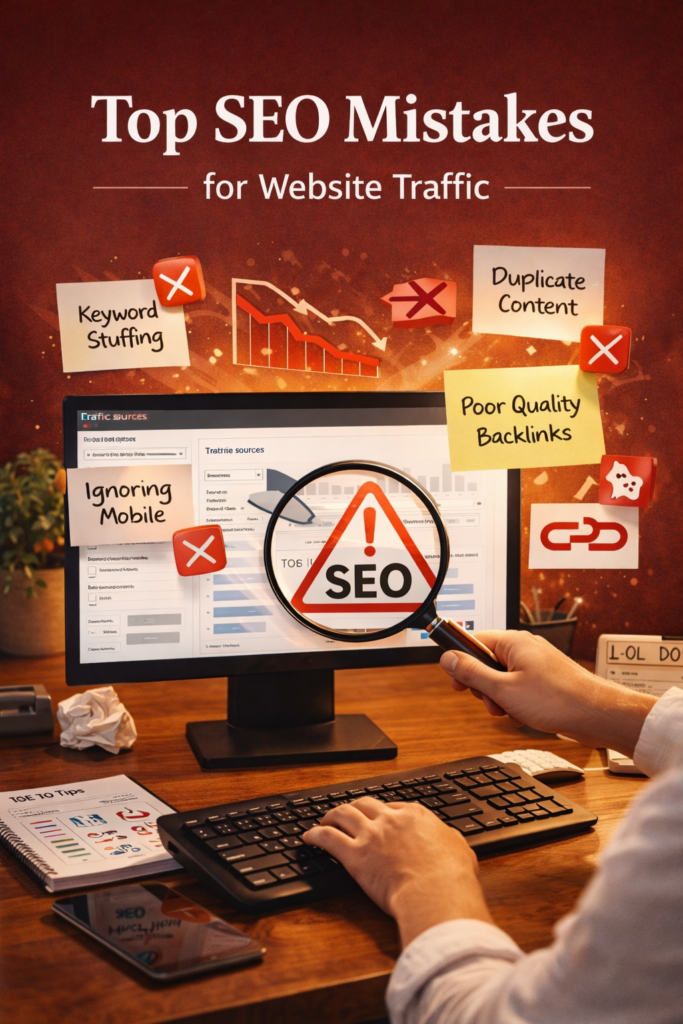
Top SEO Mistakes That Kill Website Traffic

Top SEO Mistakes That Kill Website Traffic One of the biggest SEO mistakes that silently kills website traffic is ignoring search intent. Many websites focus heavily on keywords without understanding why users are searching for those terms. Search intent can be informational, navigational, commercial, or transactional, and content that does not match this intent fails to satisfy users. When visitors land on a page and do not find what they expect, they leave quickly, increasing bounce rates. Search engines interpret this behavior as a signal that the content is not relevant, which gradually pushes the page down in rankings and reduces organic traffic. Publishing Low-Quality or Thin Content Low-quality or thin content is another major reason websites lose traffic over time. Content that lacks depth, originality, or usefulness does not build trust with users or search engines. Many websites publish short, repetitive articles just to increase posting frequency, but this strategy often backfires. Search engines prioritize helpful, well-researched, and people-first content. Thin content also struggles to earn backlinks and engagement, making it difficult to compete in search results. Fewer high-quality articles almost always perform better than large volumes of weak content. Poor Keyword Research and Optimization Improper keyword research can completely block a website’s growth. Targeting highly competitive keywords without authority makes ranking nearly impossible, while choosing keywords with no search volume results in zero traffic. Keyword stuffing is another common issue that harms readability and user experience. Overusing keywords makes content feel unnatural and spammy, pushing users away. Effective SEO requires balanced keyword usage, including long-tail keywords and related terms, placed naturally within valuable content that genuinely answers user queries Neglecting Technical SEO Issues Technical SEO problems are often invisible to website owners but extremely damaging to traffic. Slow page speed, broken links, crawl errors, duplicate content, and poor site architecture can prevent search engines from properly indexing pages. If search engine bots cannot crawl or understand a website, even great content may never appear in search results. Page speed is especially critical, as slow-loading websites frustrate users and increase bounce rates. Regular technical audits are essential to maintain and grow organic traffic. Lack of Mobile Optimization Failing to optimize for mobile users is one of the most serious SEO mistakes today. With most searches happening on smartphones, search engines now prioritize mobile-first indexing. Websites that are not mobile-friendly often suffer from poor layouts, unreadable text, slow loading times, and broken elements. This leads to a poor user experience and lost traffic. A website that performs well on desktop but poorly on mobile will struggle to rank and convert visitors effectively.   Weak On-Page SEO Elements On-page SEO elements such as title tags, meta descriptions, headers, image alt text, and internal links play a crucial role in search visibility. Many websites either duplicate title tags, use vague headings, or completely ignore meta descriptions. Poorly written titles reduce click-through rates even when a page ranks well. Search engines rely on structured on-page elements to understand content relevance, and weak optimization can significantly reduce organic traffic over time. Ignoring Internal Linking   Internal linking is often underestimated, yet it has a strong impact on SEO performance. Without proper internal links, important pages may remain hidden from both users and search engines. Internal links help distribute authority across a website, improve crawlability, and keep users engaged longer. A lack of internal linking leads to poor site structure, lower page views, and reduced ranking potential. Strategic internal linking strengthens content relationships and improves overall website traffic.   Poor Backlink Strategy Backlinks remain one of the strongest ranking factors, and mistakes in link building can seriously damage traffic. Some websites focus on acquiring large numbers of low-quality or spammy backlinks, which can lead to penalties or trust issues. Others avoid link building entirely, assuming content alone is enough. Without authoritative and relevant backlinks, it is difficult to compete in search results. A clean, ethical backlink strategy focused on quality over quantity is essential for long-term traffic growth. Failing to Update Old Content SEO is not a one-time effort, yet many websites ignore their existing content. Old blog posts often lose traffic due to outdated information, broken links, or stronger competition. Search engines favor fresh and updated content that remains relevant to users. Regularly refreshing old articles with new data, improved structure, and updated keywords can restore lost rankings and drive traffic again. Ignoring content updates wastes valuable opportunities for organic growth. Poor User Experience and Engagement User experience is closely connected to SEO success. Websites filled with intrusive ads, pop-ups, confusing navigation, or cluttered layouts drive users away quickly. Search engines monitor engagement signals such as bounce rate, time on page, and interaction behavior. When users struggle to read or navigate a site, rankings decline. A clean design, clear navigation, fast loading speed, and readable content are essential for retaining visitors and maintaining search visibility.   Lack of a Long-Term SEO Strategy Finally, the absence of a consistent and data-driven SEO strategy can slowly kill website traffic. Many websites chase trends, rely on shortcuts, or abandon strategies too quickly. SEO requires patience, regular analysis, and continuous improvement. Without tracking performance, understanding analytics, and adjusting strategies based on data, websites often repeat the same mistakes. Sustainable traffic growth comes from aligning content quality, technical optimization, user experience, and authority building into a clear long-term plan.  

Top SEO Mistakes That Kill Website Traffic Read More »

Content Repurposing Hacks for Maximum Reach

Content Repurposing Hacks for Maximum Reach Creating high-quality content takes time, effort, and strategy. But many brands make the mistake of using their content only once and then moving on to the next idea. Content repurposing solves this problem by helping you reuse existing content in multiple formats and platforms, allowing you to reach a wider audience without constantly creating new material. When done correctly, repurposing improves visibility, boosts engagement, strengthens brand consistency, and maximizes the return on your content investment. Start With Evergreen, High-Performing Content The best content to repurpose is evergreen content—blogs, videos, or guides that stay relevant over time. Analyze your website and social media analytics to identify content that performs well in terms of traffic, engagement, or conversions. These pieces already resonate with your audience, making them perfect candidates for repurposing. By building multiple formats from proven content, you ensure higher reach and better performance across platforms. Turn Blog Posts Into Multiple Content Formats A single blog post can be transformed into several content types. You can convert key points into social media posts, create carousels for Instagram or LinkedIn, design infographics for Pinterest, or turn the content into a short script for videos and reels. This approach helps you distribute the same idea in different ways, ensuring your message reaches users who prefer reading, watching, or scrolling Repurpose Long-Form Content Into Short-Form Assets Long-form content such as blogs, webinars, podcasts, or YouTube videos can be broken down into bite-sized pieces. Short clips, quotes, stats, and tips can be shared as reels, shorts, tweets, or stories. Short-form content is highly shareable and performs exceptionally well on platforms like Instagram, YouTube Shorts, and LinkedIn. This strategy keeps your content active and visible without creating new ideas from scratch Transform Videos Into Text-Based Content Video content offers endless repurposing opportunities. You can convert videos into blog posts, captions, email content, or downloadable guides by using transcripts. A single video can generate multiple articles, social posts, and email newsletters. This not only saves time but also improves accessibility and SEO by adding more indexable text content to your website. Create Infographics for Visual Learners Infographics are powerful tools for repurposing content, especially for audiences who prefer visuals. You can transform data, statistics, or step-by-step guides from blogs into easy-to-understand visuals. Infographics perform well on Pinterest, LinkedIn, and blogs, and they are often shared by other websites, helping you gain backlinks and increase organic reach. Use Quotes and Micro-Content for Social Media Every long-form piece contains valuable insights that can be turned into quotes or short tips. Highlight impactful statements, expert opinions, or actionable advice and convert them into branded quote graphics or text posts. Micro-content works well on platforms like Instagram, X (Twitter), and LinkedIn, keeping your brand visible and consistent while reinforcing your expertise. Repurpose Content for Email Marketing Email marketing is often overlooked in content repurposing strategies. You can turn blog content into weekly newsletters, tips, or educational email sequences. Summarize key points, add a call to action, and link back to the original content. This helps nurture your audience, drive repeat traffic, and build long-term relationships with subscribers Adapt Content for Different Platforms Each platform has its own content style, audience behavior, and format preferences. Repurposing is not about copying and pasting—it’s about adapting. A LinkedIn post may require a professional tone, while Instagram needs visuals and short captions. YouTube content can be longer and educational, while reels and shorts should be quick and engaging. Customizing content for each platform ensures better performance and higher engagement Leverage User-Generated and Community Content User-generated content such as testimonials, reviews, comments, and case studies can be repurposed across platforms. Convert reviews into social proof posts, testimonials into stories or reels, and success stories into blog case studies. This type of content builds trust, increases credibility, and encourages more audience participation Update and Refresh Old Content Content repurposing also includes refreshing outdated content. Update statistics, add new insights, optimize for SEO, and republish older blogs or videos. You can also reshare updated content on social media as “updated guides” or “latest insights.” This keeps your content relevant and improves search engine rankings without creating new content from scratch. Schedule and Automate Content Distribution To maximize reach, content repurposing should be supported by scheduling and automation tools. Plan how and when each repurposed asset will be shared across platforms. Consistent posting improves brand visibility and ensures your content reaches audiences in different time zones. Automation saves time and helps maintain a strong online presence Measure Performance and Optimize Strategy Tracking performance is essential for successful content repurposing. Monitor metrics such as engagement, reach, traffic, and conversions for each content format. Identify which platforms and formats perform best and optimize your strategy accordingly. Continuous improvement ensures that your repurposing efforts deliver maximum impact Work Smarter, Not Harder Content repurposing is one of the smartest strategies in digital marketing. Instead of constantly creating new content, you amplify the value of what you already have. By adapting content into multiple formats, platforms, and styles, you increase visibility, engagement, and brand authority. With a strategic approach, content repurposing helps you achieve maximum reach while saving time, effort, and resources.

Content Repurposing Hacks for Maximum Reach Read More »